Quick answer
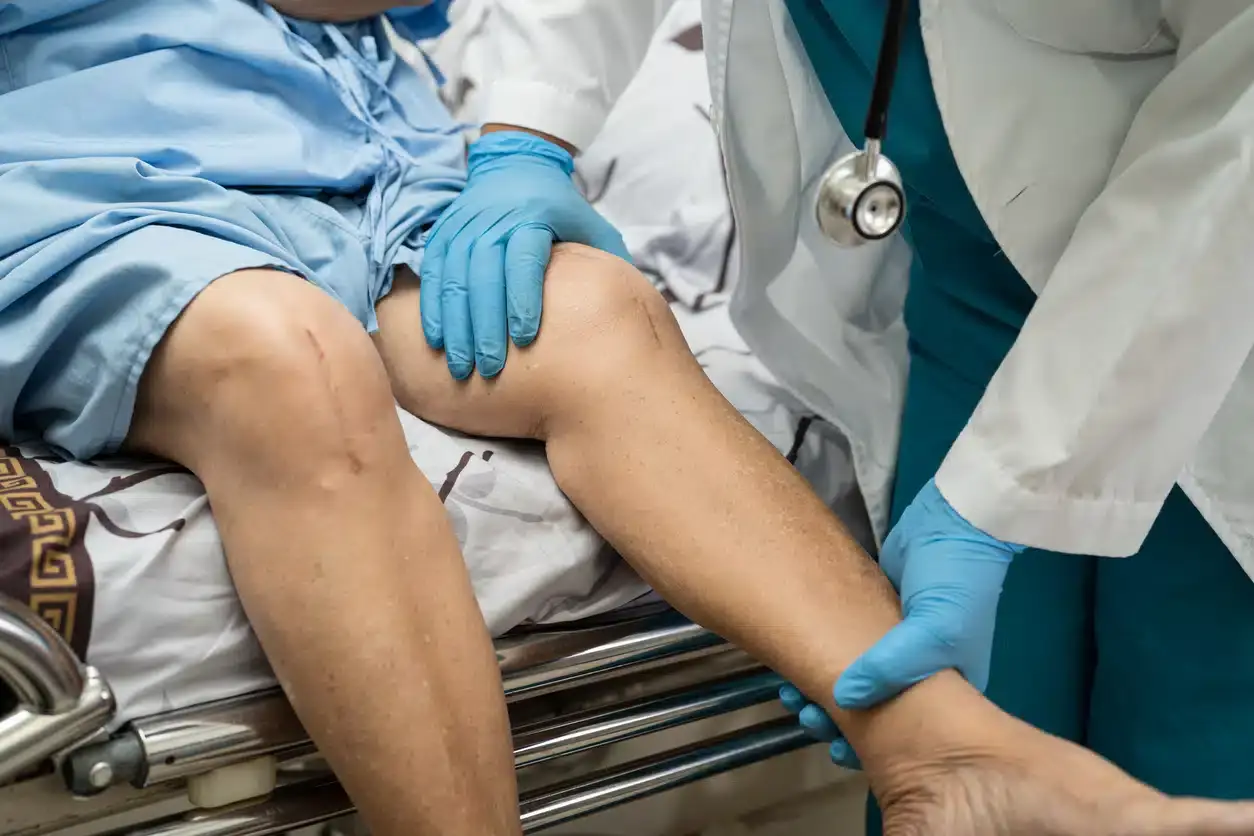
Knee replacement success depends heavily on rehabilitation — especially restoring full straightening and bending early. Structured physiotherapy from the first week is the strongest predictor of an excellent final result. Physiotherapy is a proven, first-line treatment for total knee replacement rehab.
What Is Total Knee Replacement Rehab?
Knee replacement rehab has one non-negotiable early goal: full knee straightening (“extension”) within the first weeks, followed by bending range, then strength and walking endurance. Consistent, progressive exercise — not just time — determines the outcome.
Common Symptoms of Total Knee Replacement Rehab
Symptoms vary from person to person, but total knee replacement rehab most often shows up as:
- Significant stiffness and swelling after surgery
- Difficulty fully straightening the knee
- Bending limited for sitting, stairs and baths
- Weakness climbing stairs or rising from chairs
- Walking with a limp or assistive device
- Night pain and swelling flare-ups with activity
What Causes Total Knee Replacement Rehab?
Common causes and risk factors include:
- Surgical trauma causing swelling and muscle inhibition
- Pre-operative stiffness and weakness (arthritis rarely spares muscle)
- Guarding and activity avoidance after surgery
- Scar tissue adhesions limiting glide
- Skipping or under-dosing early exercises
- Pre-existing knee deformity or limited range
How Physiotherapy Treats Total Knee Replacement Rehab
Your plan is tailored to your assessment findings, but most treatment plans combine:
- Early extension work — the strongest predictor of a good outcome
- Graded flexion restoration for sitting, stairs and driving
- Swelling management: elevation, compression, pacing
- Progressive quadriceps, glute and calf strengthening
- Gait retraining to eliminate the limp
- Milestones to full walking, stairs and activity tolerance
At Dynamic Balance Physiotherapy & Vestibular Rehab Clinic in Clayton, Cloverdale, Surrey & Langley, BC, every plan is one-on-one, evidence-based and built around your goals — no two treatment plans are alike.
What to Expect at Your First Visit
Your first appointment is a 45-minute one-on-one assessment. Your physiotherapist reviews your health history, tests the movement, strength and joints involved in your total knee replacement rehab, explains what is actually driving your symptoms, and usually starts treatment the same day. You leave with a clear diagnosis, a personalized plan and realistic milestones — no doctor’s referral needed.
Total Knee Replacement Rehab FAQs
Do I need a referral to physiotherapy for Total Knee Replacement Rehab?
No. In BC, physiotherapists are primary-care practitioners, so you can book directly with us. If your symptoms ever need a physician’s eyes, we will tell you and point you in the right direction.
How long does recovery from knee replacement take?
Most people walk without an aid around 6 weeks and feel substantially recovered by 3 months, with strength and endurance continuing to improve for a full year. The difference between an average and an excellent result is almost always the quality and consistency of rehabilitation in the first 12 weeks.
How many sessions will my Total Knee Replacement Rehab need?
Most patients notice meaningful improvement within 4–8 visits, though recovery varies with severity and how long symptoms have been present. Your physiotherapist gives you a personalized estimate after the first assessment.
Get Total Knee Replacement Rehab Relief in Surrey & Langley
If total knee replacement rehab is limiting your day, the team at Dynamic Balance Physiotherapy & Vestibular Rehab Clinic is ready to help. Book online or call — same-week appointments are usually available, and we direct bill ICBC, WorkSafeBC and most extended-health plans.